

Hey there! As a supplier of Composite Post Insulators, I often get asked this question: Can composite post insulators withstand high winds? Well, let's dive right into it.
Understanding Composite Post Insulators
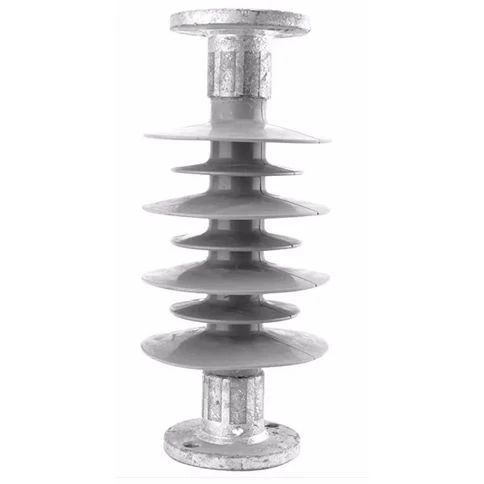
First off, what are composite post insulators? They're a type of electrical insulator made from a combination of materials, usually a fiberglass core and a silicone rubber housing. These insulators are used in power systems to support electrical conductors and prevent current leakage to the ground. They're popular because they're lightweight, durable, and have excellent electrical and mechanical properties.

The Challenge of High Winds
High winds can pose a significant challenge to any structure, including composite post insulators. When strong winds blow, they exert a force on the insulators. This force can cause the insulators to sway, bend, or even break if they're not designed to handle it.
The wind force on an insulator depends on several factors, such as the wind speed, the shape and size of the insulator, and the orientation of the insulator with respect to the wind direction. For example, a taller insulator will experience more wind force than a shorter one, and an insulator that's directly facing the wind will be under more stress than one that's at an angle.
How Composite Post Insulators Are Designed to Withstand High Winds
Composite post insulators are engineered to withstand high winds. The fiberglass core provides the necessary strength and stiffness to resist bending and breaking. It's like the backbone of the insulator, giving it the ability to stand up to the forces of nature.
The silicone rubber housing also plays an important role. It not only provides electrical insulation but also helps to protect the fiberglass core from environmental factors like UV radiation and moisture. The shape of the housing is designed to reduce wind resistance. Many composite post insulators have a streamlined shape that allows the wind to flow around them more easily, reducing the force exerted on the insulator.
Testing and Certification
Before composite post insulators are put on the market, they go through a series of tests to ensure they can withstand high winds. These tests are usually carried out in accordance with international standards, such as the IEC (International Electrotechnical Commission) standards.
One of the key tests is the mechanical load test. In this test, the insulator is subjected to a specified load to simulate the force of high winds. The insulator must be able to withstand this load without breaking or experiencing any significant deformation.
Another important test is the wind tunnel test. In a wind tunnel, the insulator is exposed to different wind speeds and directions to evaluate its performance under various wind conditions. This helps to ensure that the insulator will perform well in real-world situations.
Real-World Examples
There are many real-world examples of composite post insulators withstanding high winds. For instance, in areas prone to hurricanes and typhoons, composite post insulators have been used successfully in power transmission and distribution systems. They've proven to be reliable and durable, even in the face of extreme weather conditions.
Let's take a look at some of our products. We offer a range of composite post insulators, including the 50kv Composite Post Insulator, the 126kv Composite Post Insulator, and the 20kv Composite Post Insulator. These insulators are designed to meet the highest standards of quality and performance, and they're capable of withstanding high winds.
Factors Affecting Wind Resistance
While composite post insulators are designed to withstand high winds, there are still some factors that can affect their wind resistance. For example, the installation of the insulator is crucial. If the insulator is not installed correctly, it may not be able to withstand the wind forces as effectively.
The age and condition of the insulator also play a role. Over time, the materials in the insulator may degrade, reducing its strength and wind resistance. Regular maintenance and inspection are essential to ensure that the insulators are in good condition and can continue to perform well.
Conclusion
So, can composite post insulators withstand high winds? The answer is yes. With their strong fiberglass core, protective silicone rubber housing, and streamlined design, composite post insulators are well-equipped to handle the forces of high winds. They've been tested and proven to be reliable in real-world applications.
If you're in the market for composite post insulators, we'd love to talk to you. Our team of experts can help you choose the right insulator for your needs and ensure that it's installed correctly. Don't hesitate to reach out for more information or to discuss your specific requirements. We're here to provide you with the best products and services.
References
- International Electrotechnical Commission (IEC) standards on electrical insulators.
- Technical literature on composite post insulators from industry manufacturers.


