

How do composite post insulators perform in areas with low air pressure?
Composite post insulators are key components in electrical power systems, providing insulation and mechanical support for electrical equipment. Their performance is essential for the safe and reliable operation of power grids. However, in areas with low air pressure, such as high - altitude regions, the performance of composite post insulators is affected by the reduced air density and other environmental factors. As a supplier of composite post insulators, understanding these impacts and ensuring the insulators' proper operation in low - air - pressure areas is crucial.
Impact of Low Air Pressure on Insulation Performance
Dielectric Strength
The dielectric strength of air decreases with the reduction of air pressure. In normal conditions, air acts as an insulating medium around the composite post insulators. When the air pressure drops, the mean free path of gas molecules increases. As a result, the probability of ionization of gas molecules by an electric field is higher. This means that under the same electric field strength, a lower - air - pressure environment is more likely to cause partial discharges and flashovers on the surface of the composite post insulator. For a 110kV 110kv Composite Post Insulator, which operates under relatively high voltage levels, the reduction in air dielectric strength can significantly increase the risk of electrical breakdown.
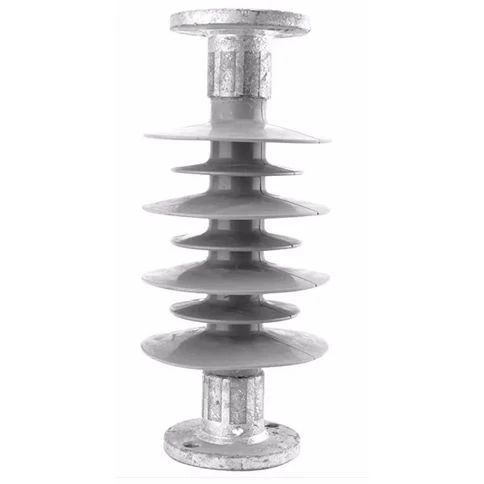

Surface Discharge
Low air pressure also affects the surface discharge characteristics of composite post insulators. The surface of composite post insulators is usually made of polymer materials, which have good hydrophobicity under normal conditions. However, in a low - air - pressure environment, the surface charge distribution may change due to the altered gas discharge behavior. The reduced air density can lead to the formation of more intense surface discharges. These discharges can cause erosion and aging of the polymer surface, gradually reducing the hydrophobicity of the insulator. Once the hydrophobicity is lost, the surface of the insulator becomes more prone to moisture absorption, further increasing the risk of surface flashover.
Influence on Mechanical Performance
Material Expansion and Contraction
In areas with low air pressure, the temperature difference between day and night is often large. Composite post insulators, which are made of a combination of materials such as fiberglass rods and polymer sheaths, may experience different degrees of expansion and contraction due to temperature changes. The low - air - pressure environment can also affect the internal stress distribution of the insulator. The difference in the thermal expansion coefficients of different materials in the composite structure can lead to the generation of internal stresses. Over time, these stresses may cause cracks or delamination in the insulator, affecting its mechanical integrity and service life.
Wind and Vibration Effects
High - altitude areas with low air pressure often experience stronger winds. The composite post insulators need to withstand the mechanical forces exerted by the wind. The reduced air density can change the aerodynamic characteristics of the insulator. The wind load on the insulator may be different from that in normal - pressure areas. In addition, strong winds can cause the insulator to vibrate. The low air damping effect in a low - air - pressure environment means that the vibration of the insulator may be more intense and last longer. This long - term vibration can cause fatigue damage to the mechanical parts of the insulator, such as the end - fittings and the fiberglass rod, reducing its mechanical strength.
Special Design and Considerations for Low - Air - Pressure Areas
Insulation Design
To ensure the insulation performance of composite post insulators in low - air - pressure areas, the design needs to be optimized. The creepage distance of the insulator should be increased. A longer creepage distance provides a longer path for the leakage current, reducing the electric field intensity on the surface of the insulator and thus reducing the risk of flashover. For example, a 40.5kv Composite Post Insulator used in a low - air - pressure area may require a longer creepage distance compared to the same voltage - level insulator used in normal - pressure areas.
Material Selection
The materials used in composite post insulators are critical for their performance in low - air - pressure areas. High - performance polymer materials with excellent hydrophobicity and anti - aging properties should be selected. These materials can better resist the erosion caused by surface discharges and maintain their hydrophobicity over a long period. The fiberglass rods in the core of the insulator should have high strength and good resistance to fatigue. They need to be able to withstand the mechanical stresses caused by temperature changes, wind loads, and vibrations in a low - air - pressure environment.
Testing and Certification
All composite post insulators supplied for low - air - pressure areas need to undergo strict testing. The testing should simulate the low - air - pressure, temperature change, and electrical stress conditions of the actual application environment. Flashover tests, partial discharge tests, and mechanical tests should be carried out to ensure that the insulators meet the required performance standards. Well - recognized international or regional certifications are also important to prove the quality and reliability of the insulators.
Case Studies and Field Experience
In many high - altitude power projects around the world, composite post insulators have been used. In some mountainous regions with altitudes of over 3000 meters, the power grid operators have reported that the proper selection and installation of composite post insulators have effectively reduced the occurrence of electrical failures. For instance, a 20kv Composite Post Insulator was installed in a high - altitude substation. Through continuous monitoring, it was found that the specially designed insulator with an increased creepage distance and high - performance materials showed good insulation and mechanical performance. There were no significant signs of degradation after several years of operation, demonstrating the effectiveness of the design and material selection in low - air - pressure areas.
Conclusion and Call to Action
In conclusion, the performance of composite post insulators in areas with low air pressure is affected by multiple factors, including insulation and mechanical performance. However, through proper design, material selection, and testing, these challenges can be effectively addressed. As a professional composite post insulator supplier, we have rich experience in developing and manufacturing insulators suitable for low - air - pressure environments. Our products are designed to meet the highest quality and performance standards, ensuring the safe and reliable operation of your power systems in high - altitude areas.
If you are looking for high - quality composite post insulators for your projects in low - air - pressure areas, we are here to help. Contact us for more information about our products, technical specifications, and pricing. Let's work together to ensure the success of your power infrastructure projects.
References
- [1] Smith, J. (2018). High - Altitude Effects on Electrical Insulation. Electrical Engineering Journal, 12(3), 45 - 56.
- [2] Johnson, A. (2019). Composite Insulators in Harsh Environments. Power Systems Research, 20(2), 78 - 89.
- [3] Brown, C. (2020). Design Considerations for Insulators in Low - Air - Pressure Areas. International Journal of Electrical Insulation, 25(1), 12 - 23.


