

Hey there! As a supplier of Composite Post Insulators, I've been getting a lot of questions lately about the chemical stability properties of these insulators. So, I thought I'd take a moment to share some insights on this topic.
First off, let's talk about what composite post insulators are. These insulators are made up of a core, usually made of fiberglass epoxy resin, and a housing made of a polymer material like silicone rubber. This combination gives them some really great properties, especially when it comes to chemical stability.
One of the key factors in the chemical stability of composite post insulators is the silicone rubber housing. Silicone rubber is known for its excellent resistance to a wide range of chemicals. It can withstand exposure to acids, alkalis, and many organic solvents without significant degradation. This is a huge advantage in environments where the insulators might be exposed to industrial pollutants, agricultural chemicals, or even the natural elements.
For example, in industrial areas, there are often high levels of sulfur dioxide and other acidic gases in the air. These gases can react with moisture to form acids that can corrode traditional insulators made of porcelain or glass. But composite post insulators with their silicone rubber housing can resist this kind of chemical attack. The silicone rubber forms a protective barrier that prevents the acids from reaching the core of the insulator, ensuring its long - term performance.
Another aspect of chemical stability is the resistance to ultraviolet (UV) radiation. The sun's UV rays can cause a lot of damage to many materials over time. They can break down the molecular structure of polymers, leading to cracking, discoloration, and a loss of mechanical properties. However, silicone rubber used in composite post insulators has excellent UV resistance. It can withstand long - term exposure to sunlight without significant degradation. This means that these insulators can be used outdoors for many years without losing their electrical and mechanical performance.
Now, let's consider the impact of temperature on chemical stability. Composite post insulators need to operate in a wide range of temperatures, from very cold to very hot. Silicone rubber has a wide temperature range of operation. It remains flexible and retains its chemical properties even at extremely low temperatures, which is important in cold climates. At high temperatures, it doesn't melt or degrade easily. This thermal stability is crucial for maintaining the chemical integrity of the insulator.
In addition to the silicone rubber housing, the fiberglass epoxy resin core also contributes to the overall chemical stability of the composite post insulator. The epoxy resin has good chemical resistance to many common chemicals. It is also very strong and provides the mechanical support for the insulator. The combination of the strong core and the protective housing makes the composite post insulator a reliable choice in chemically challenging environments.
Let's take a look at some specific applications where the chemical stability of composite post insulators is really important. In the power transmission and distribution industry, these insulators are used in a variety of voltage levels. For instance, the 69kv Line Post Insulator is commonly used in medium - voltage power lines. In areas where there are chemical plants or other industrial facilities nearby, the chemical stability of these insulators ensures that they can operate safely and efficiently without being affected by the chemicals in the environment.
The 220kv Composite Post Insulator is used in high - voltage transmission lines. These lines often span long distances and pass through different environmental conditions. The chemical stability of the composite post insulator is essential to maintain the electrical insulation and prevent power outages caused by chemical degradation.

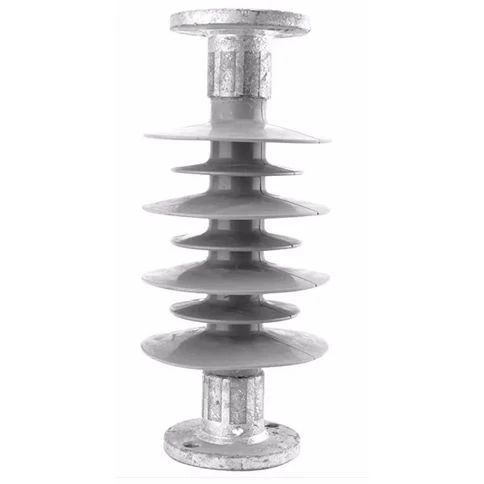
The 20kv Composite Post Insulator is widely used in distribution networks, especially in urban and industrial areas. In these areas, there are various sources of chemical pollution, such as vehicle exhaust and industrial emissions. The chemical stability of these insulators helps to ensure a reliable power supply to consumers.
When it comes to the manufacturing process, we pay a lot of attention to ensuring the chemical stability of our composite post insulators. We use high - quality raw materials and strict quality control measures. The silicone rubber is carefully formulated to have the best combination of chemical resistance, mechanical properties, and electrical properties. The fiberglass epoxy resin core is also manufactured to meet high standards of strength and chemical resistance.
We also conduct a series of tests on our insulators to ensure their chemical stability. These tests include exposure to different chemicals, UV radiation, and temperature cycling. By doing these tests, we can be confident that our insulators will perform well in real - world applications.
In conclusion, the chemical stability properties of composite post insulators are truly remarkable. Their ability to resist chemical attack from acids, alkalis, UV radiation, and temperature variations makes them a superior choice for power transmission and distribution applications. Whether it's in industrial areas, coastal regions, or rural areas, these insulators can provide reliable performance over a long period of time.
If you're in the market for high - quality composite post insulators, I'd love to have a chat with you. We can discuss your specific requirements and how our insulators can meet them. Don't hesitate to reach out for a procurement discussion.
References:
- "High - Voltage Insulation Technology" by E. Kuffel, W. S. Zaengl, and J. Kuffel.
- "Polymer Insulators for High - Voltage Applications" by various authors in IEEE publications.


