

As a supplier of 20kv Composite Post Insulators, I'm often asked about the main materials used in these essential electrical components. In this blog post, I'll delve into the key materials that make up a 20kv Composite Post Insulator, their properties, and why they are crucial for the insulator's performance.
Core Material: Fiberglass Reinforced Plastic (FRP)
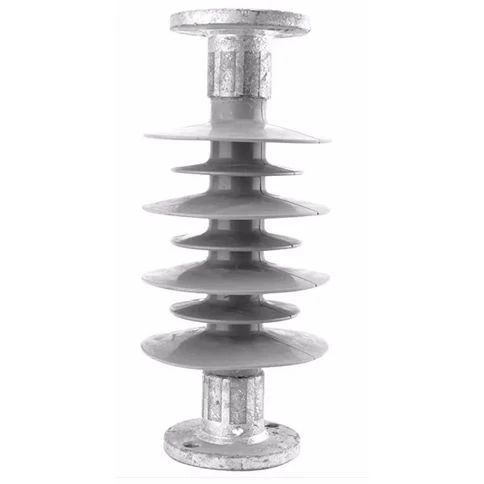
The core of a 20kv Composite Post Insulator is typically made of Fiberglass Reinforced Plastic (FRP). FRP is a composite material consisting of a polymer matrix reinforced with fine glass fibers. This material offers several advantages that make it ideal for use in insulators.
One of the primary benefits of FRP is its high mechanical strength. It can withstand significant mechanical loads, such as those caused by wind, ice, and the weight of the electrical conductors. This strength is essential for ensuring the stability and reliability of the insulator in various environmental conditions.
In addition to its mechanical strength, FRP also has excellent electrical insulation properties. It has a high dielectric strength, which means it can resist the flow of electrical current and prevent electrical breakdown. This is crucial for maintaining the safety and efficiency of the electrical system.
Another advantage of FRP is its corrosion resistance. Unlike traditional porcelain or glass insulators, FRP is not susceptible to corrosion from environmental factors such as moisture, chemicals, and pollutants. This makes it a more durable and long-lasting option, especially in harsh or corrosive environments.
Housing Material: Silicone Rubber
The housing of a 20kv Composite Post Insulator is usually made of silicone rubber. Silicone rubber is a synthetic elastomer that offers several unique properties that make it well-suited for use in insulators.
One of the key advantages of silicone rubber is its excellent hydrophobicity. Hydrophobicity refers to the ability of a material to repel water. In the case of insulators, hydrophobicity is important because it helps to prevent the formation of continuous water films on the surface of the insulator. When water films form on the surface of an insulator, they can increase the surface conductivity and lead to electrical leakage and flashover. Silicone rubber's hydrophobicity helps to reduce the risk of these problems and improve the insulator's performance.
Silicone rubber also has good weather resistance. It can withstand extreme temperatures, ultraviolet (UV) radiation, and ozone exposure without significant degradation. This makes it suitable for use in outdoor electrical applications, where it is exposed to the elements.
In addition to its hydrophobicity and weather resistance, silicone rubber also has excellent electrical insulation properties. It has a high dielectric constant and a low loss tangent, which means it can effectively store and dissipate electrical energy. This helps to reduce the energy losses in the electrical system and improve its efficiency.
Another advantage of silicone rubber is its flexibility. It can be easily molded into complex shapes, which allows for the design of insulators with optimized profiles for specific applications. This flexibility also makes it easier to install and maintain the insulators.
End Fittings: Metal
The end fittings of a 20kv Composite Post Insulator are typically made of metal, such as aluminum or steel. The end fittings serve several important functions.
Firstly, they provide a mechanical connection between the insulator and the electrical conductors or other components of the electrical system. They are designed to withstand the mechanical loads and stresses associated with the installation and operation of the insulator.
Secondly, the end fittings also play a role in the electrical performance of the insulator. They are designed to ensure a good electrical contact between the insulator and the conductors, which helps to minimize the electrical resistance and prevent electrical arcing.
The choice of metal for the end fittings depends on several factors, including the specific application, the environmental conditions, and the cost. Aluminum is a popular choice because it is lightweight, corrosion-resistant, and has good electrical conductivity. Steel is also used in some applications, especially where higher mechanical strength is required.
Importance of Material Selection
The selection of the right materials is crucial for the performance and reliability of a 20kv Composite Post Insulator. Each material plays a specific role in the insulator's function, and any compromise in the quality or properties of the materials can have a significant impact on the insulator's performance.
For example, if the core material does not have sufficient mechanical strength, the insulator may break or fail under mechanical loads. If the housing material does not have good hydrophobicity, the insulator may be more prone to electrical leakage and flashover. And if the end fittings do not provide a good electrical contact, the insulator may experience increased electrical resistance and energy losses.

As a supplier of 20kv Composite Post Insulators, we take great care in selecting the highest quality materials for our products. We work closely with our material suppliers to ensure that the materials meet our strict quality standards and specifications. We also conduct rigorous testing and quality control procedures to ensure that our insulators perform as expected and meet the requirements of our customers.
Comparison with Other Types of Insulators
20kv Composite Post Insulators offer several advantages over traditional porcelain or glass insulators. As mentioned earlier, composite insulators are more lightweight, corrosion-resistant, and flexible than porcelain or glass insulators. They also have better hydrophobicity and weather resistance, which makes them more suitable for use in outdoor electrical applications.
In addition, composite insulators are easier to install and maintain than porcelain or glass insulators. They are typically lighter in weight, which makes them easier to handle and transport. They also do not require the same level of maintenance as porcelain or glass insulators, such as regular cleaning and inspection for cracks or damage.
However, it's important to note that composite insulators also have some limitations. For example, they may be more expensive than porcelain or glass insulators. They also require more careful handling and installation to avoid damage to the silicone rubber housing.
Applications of 20kv Composite Post Insulators
20kv Composite Post Insulators are widely used in a variety of electrical applications, including power transmission and distribution systems, substations, and industrial plants. They are used to support and insulate electrical conductors, such as overhead power lines and busbars, and to prevent electrical current from flowing between different parts of the electrical system.
In power transmission and distribution systems, 20kv Composite Post Insulators are used to support the high-voltage conductors and maintain the electrical insulation between the conductors and the ground or other components of the system. They are also used in substations to insulate the electrical equipment and prevent electrical faults and short circuits.
In industrial plants, 20kv Composite Post Insulators are used in a variety of electrical applications, such as motor control centers, switchgear, and transformers. They are used to support and insulate the electrical conductors and equipment and to ensure the safe and efficient operation of the electrical system.
Conclusion
In conclusion, the main materials used in a 20kv Composite Post Insulator are Fiberglass Reinforced Plastic (FRP) for the core, silicone rubber for the housing, and metal for the end fittings. Each material plays a crucial role in the insulator's performance, providing mechanical strength, electrical insulation, hydrophobicity, and weather resistance.
As a supplier of 20kv Composite Post Insulators, we are committed to providing our customers with high-quality products that meet their specific needs and requirements. If you are interested in learning more about our 20kv Composite Post Insulators or would like to discuss your specific application requirements, please visit our website at 20kv Composite Post Insulator. We also offer 145kv Composite Post Insulator and 220kv Composite Post Insulator for higher voltage applications.
We welcome the opportunity to work with you and provide you with the best solutions for your electrical insulation needs. Contact us today to start the procurement discussion and take the first step towards a reliable and efficient electrical system.
References
- Grover, I. K. (2013). High Voltage Engineering: Fundamentals and Applications. New Delhi: PHI Learning.
- Judd, M. D., & Dawalibi, F. P. (2003). Composite Insulators for Transmission Lines. Boca Raton, FL: CRC Press.
- Lewis, M. H. (2008). Insulators for High-Voltage Power Systems. New York: Wiley-IEEE Press.


