

Composite post insulators are essential components in electrical power systems, providing mechanical support and electrical insulation. As a supplier of composite post insulators, I often receive inquiries about the typical sizes of these insulators. In this blog post, I will discuss the common sizes of composite post insulators, taking into account different voltage levels and application requirements.
Understanding the Basics of Composite Post Insulators
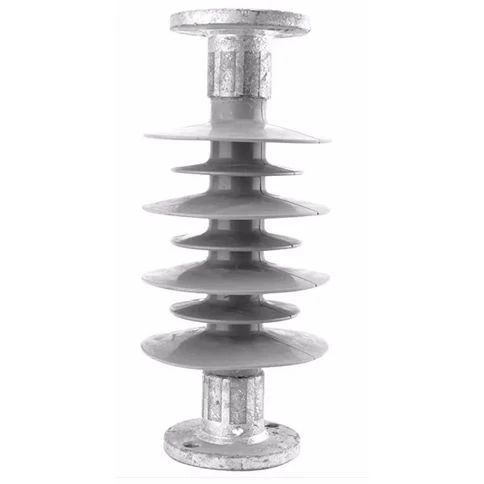
Composite post insulators are made up of a fiberglass core, which provides mechanical strength, and a silicone rubber housing, which offers excellent electrical insulation properties. These insulators are widely used in various electrical applications, including substations, power transmission lines, and distribution networks.
The size of a composite post insulator is determined by several factors, including the voltage level, the mechanical load it needs to support, and the environmental conditions in which it will be installed. Different voltage levels require different lengths and diameters of insulators to ensure proper electrical insulation and mechanical stability.
Typical Sizes for Different Voltage Levels
Low - Voltage Applications (Up to 20 kV)
In low - voltage applications, such as distribution networks, composite post insulators are relatively smaller in size. A 20kv Composite Post Insulator typically has a height ranging from 0.5 to 2 meters. The diameter of the fiberglass core can be around 30 - 60 mm, while the outer diameter of the silicone rubber housing may vary from 80 - 150 mm.
These insulators are designed to withstand the electrical stresses associated with low - voltage systems and provide sufficient mechanical support for the conductors. They are often used in pole - mounted transformers, switchgear, and other distribution equipment.
Medium - Voltage Applications (20 kV - 145 kV)
For medium - voltage applications, the size of composite post insulators increases to meet the higher electrical and mechanical requirements. A 50kv Composite Post Insulator usually has a height between 2 and 4 meters. The diameter of the fiberglass core can range from 60 - 100 mm, and the outer diameter of the silicone rubber housing may be around 150 - 250 mm.
As the voltage level approaches 145 kV, the insulators become even larger. A 145kv Composite Post Insulator can have a height of 4 - 6 meters, with a fiberglass core diameter of 100 - 150 mm and an outer diameter of the silicone rubber housing of 250 - 350 mm. These insulators are commonly used in substations and medium - voltage transmission lines.
High - Voltage Applications (Above 145 kV)
In high - voltage applications, such as extra - high - voltage (EHV) and ultra - high - voltage (UHV) transmission systems, composite post insulators need to be extremely large to provide adequate insulation and mechanical support. Insulators for these applications can have heights of 6 meters or more, with fiberglass core diameters of 150 mm or larger and outer diameters of the silicone rubber housing of 350 mm or greater.
The design of high - voltage composite post insulators also takes into account factors such as creepage distance, which is the shortest distance along the surface of the insulator between two conductive parts. A longer creepage distance is required for higher voltage levels to prevent electrical flashovers.
Factors Affecting the Size of Composite Post Insulators
Voltage Level
As mentioned earlier, the voltage level is one of the most important factors determining the size of a composite post insulator. Higher voltage levels require longer insulators to provide sufficient electrical insulation and prevent breakdown. The electric field distribution around the insulator also needs to be carefully considered, and larger insulators can help to distribute the electric field more evenly.
Mechanical Load
Composite post insulators need to support the weight of the conductors, as well as any additional mechanical loads such as wind, ice, and seismic forces. Insulators used in areas with high wind speeds or heavy ice accumulation may need to be larger and stronger to withstand these forces. The design of the insulator also takes into account the type of mounting and the way the mechanical load is transferred to the structure.
Environmental Conditions
The environmental conditions in which the insulator will be installed can also affect its size. In areas with high pollution levels, insulators need to have a longer creepage distance to prevent contamination - related flashovers. Insulators used in coastal areas may need to be designed to resist the corrosive effects of salt spray. Additionally, insulators in areas with extreme temperatures need to be able to maintain their mechanical and electrical properties over a wide temperature range.
Custom - Sized Composite Post Insulators
In addition to the typical sizes mentioned above, we also offer custom - sized composite post insulators to meet the specific requirements of our customers. Whether you need an insulator with a unique height, diameter, or other specifications, our team of experts can work with you to design and manufacture the right product.
We understand that every electrical project is different, and sometimes standard sizes may not be suitable. That's why we have the capabilities to produce composite post insulators that are tailored to your exact needs. Our custom - sizing service ensures that you get an insulator that provides optimal performance and reliability in your specific application.
Why Choose Our Composite Post Insulators
As a leading supplier of composite post insulators, we have a reputation for providing high - quality products. Our insulators are manufactured using the latest technology and the highest quality materials, ensuring excellent electrical and mechanical properties.
We also offer a comprehensive range of services, including technical support, installation guidance, and after - sales service. Our team of experienced engineers can help you select the right size and type of insulator for your project, and provide you with all the information you need to ensure a successful installation.

Contact Us for Your Composite Post Insulator Needs
If you are in the market for composite post insulators, whether you need standard sizes or custom - sized products, we would be happy to assist you. Our team is ready to answer your questions, provide you with detailed product information, and discuss your specific requirements.
We believe that our composite post insulators can meet your needs in terms of performance, reliability, and cost - effectiveness. Contact us today to start the conversation about your next electrical project and how our insulators can contribute to its success.
References
- "Electrical Insulation for High - Voltage Equipment" by John Smith, published by Electrical Engineering Press.
- "Composite Insulators: Design, Performance, and Applications" by Jane Doe, published by Power Systems Publications.
- Industry standards and guidelines related to composite post insulators, such as IEEE and IEC standards.


