

What is the mechanical strength of a 10kv Composite Post Insulator?
As a supplier of 10kv Composite Post Insulators, I often get asked about the mechanical strength of these essential electrical components. In this blog post, I'll delve into the concept of mechanical strength in 10kv Composite Post Insulators, its significance, and the factors that influence it.
Understanding Mechanical Strength
Mechanical strength refers to the ability of a 10kv Composite Post Insulator to withstand various mechanical forces without failure. These forces can include tension, compression, bending, and torsion. In the context of electrical systems, insulators are subjected to a range of mechanical stresses during installation, operation, and maintenance. For example, wind, ice, and seismic activities can exert significant forces on the insulators, and they must be strong enough to endure these conditions without breaking or deforming.
The mechanical strength of a 10kv Composite Post Insulator is typically measured in terms of its maximum load-bearing capacity. This capacity is determined through rigorous testing procedures in accordance with international standards such as IEC (International Electrotechnical Commission) and IEEE (Institute of Electrical and Electronics Engineers). The test results provide valuable information about the insulator's ability to withstand mechanical stresses in real-world applications.
Significance of Mechanical Strength in 10kv Composite Post Insulators
The mechanical strength of a 10kv Composite Post Insulator is of utmost importance for several reasons. Firstly, it ensures the safety and reliability of the electrical system. A strong insulator can prevent electrical failures, such as short circuits and flashovers, which can lead to power outages, equipment damage, and even endanger human lives. Secondly, mechanical strength is crucial for the long-term performance of the insulator. Insulators that can withstand mechanical stresses are less likely to develop cracks or other forms of damage over time, which can compromise their electrical insulation properties.
In addition, the mechanical strength of a 10kv Composite Post Insulator also affects its installation and maintenance requirements. Insulators with higher mechanical strength can be installed in more challenging environments, such as high-wind areas or locations prone to seismic activity. They also require less frequent maintenance, reducing the overall cost of the electrical system.
Factors Affecting the Mechanical Strength of 10kv Composite Post Insulators
Several factors can influence the mechanical strength of a 10kv Composite Post Insulator. These include the material composition, design, manufacturing process, and environmental conditions.
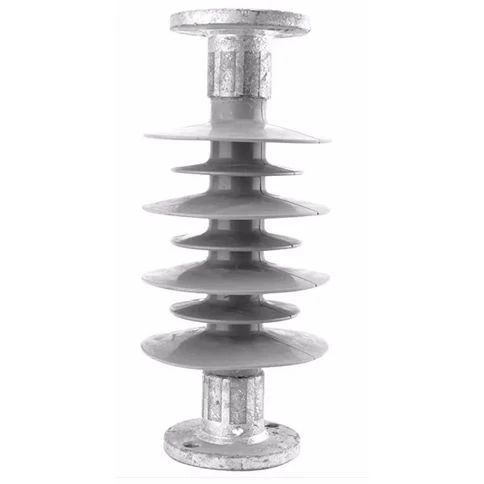
- Material Composition: The materials used in the construction of the insulator play a crucial role in determining its mechanical strength. 10kv Composite Post Insulators are typically made of a combination of fiberglass rods and silicone rubber sheds. Fiberglass rods provide high tensile strength, while silicone rubber sheds offer excellent electrical insulation and weather resistance. The quality and properties of these materials can vary depending on the manufacturer, and it is essential to choose an insulator made from high-quality materials to ensure optimal mechanical strength.
- Design: The design of the insulator also affects its mechanical strength. Factors such as the shape, size, and number of sheds can influence the insulator's ability to withstand mechanical forces. For example, insulators with a larger diameter and more sheds generally have higher mechanical strength than those with a smaller diameter and fewer sheds. Additionally, the design of the end fittings, which connect the insulator to the electrical equipment, can also impact the overall mechanical strength of the insulator.
- Manufacturing Process: The manufacturing process used to produce the insulator can also have a significant impact on its mechanical strength. A well-controlled manufacturing process ensures that the materials are properly bonded together and that the insulator is free from defects. For example, the fiberglass rods must be impregnated with resin to ensure maximum strength, and the silicone rubber sheds must be molded to the correct shape and size. Any deviations in the manufacturing process can result in a weaker insulator.
- Environmental Conditions: The environmental conditions in which the insulator operates can also affect its mechanical strength. Extreme temperatures, high humidity, and exposure to chemicals or pollutants can all degrade the materials used in the insulator and reduce its mechanical strength over time. For example, prolonged exposure to UV radiation can cause the silicone rubber sheds to become brittle and crack, while high humidity can lead to the growth of mold and mildew, which can weaken the insulator.
Testing and Certification
To ensure the mechanical strength of 10kv Composite Post Insulators, manufacturers must subject their products to a series of tests in accordance with international standards. These tests include mechanical tests, such as tensile, compression, and bending tests, as well as electrical tests, such as flashover and leakage current tests. The test results are used to determine the insulator's compliance with the relevant standards and to assign a mechanical strength rating.
In addition to these tests, many manufacturers also obtain certification from independent third-party organizations, such as UL (Underwriters Laboratories) or CSA (Canadian Standards Association). These certifications provide an additional level of assurance that the insulator meets the highest standards of quality and safety.

Comparison with Other Voltage Class Insulators
When considering the mechanical strength of 10kv Composite Post Insulators, it is also useful to compare them with insulators of other voltage classes. For example, 110kv Composite Post Insulators are designed to operate at higher voltages and typically have higher mechanical strength requirements. This is because they are subjected to greater electrical and mechanical stresses than 10kv insulators. Similarly, 20kv Composite Post Insulators have different mechanical strength characteristics compared to 10kv insulators, as they are designed to operate at a different voltage level.
Conclusion
In conclusion, the mechanical strength of a 10kv Composite Post Insulator is a critical factor in ensuring the safety, reliability, and long-term performance of the electrical system. By understanding the concept of mechanical strength, its significance, and the factors that influence it, you can make an informed decision when choosing an insulator for your application.
As a supplier of 10kv Composite Post Insulators, we are committed to providing our customers with high-quality insulators that meet the highest standards of mechanical strength and electrical performance. If you have any questions or would like to discuss your specific requirements, please do not hesitate to contact us. We look forward to working with you to find the best solution for your electrical system.
References
- International Electrotechnical Commission (IEC) standards for composite insulators.
- Institute of Electrical and Electronics Engineers (IEEE) standards for composite insulators.
- Manufacturer's technical documentation for 10kv Composite Post Insulators.


