

Hey there! As a supplier of 50kv Composite Post Insulators, I often get asked about the surface hydrophobicity of these insulators. So, I thought I'd take a few minutes to explain what it is and why it's so important.
First off, let's talk about what hydrophobicity means. Hydrophobicity is the property of a material to repel water. In the case of 50kv Composite Post Insulators, having a hydrophobic surface is crucial. When an insulator has a hydrophobic surface, water doesn't spread out on it but instead forms droplets. This may seem like a small thing, but it has a huge impact on the insulator's performance.
You see, in real - world conditions, insulators are exposed to all sorts of weather. Rain, fog, and humidity can deposit water on the surface of the insulator. If the surface is hydrophilic (the opposite of hydrophobic, attracting water), the water will form a continuous film. This film can conduct electricity, which is a big no - no for insulators. It can lead to leakage currents, flashovers, and ultimately, a failure of the insulator.
On the other hand, when the surface of a 50kv Composite Post Insulator is hydrophobic, the water droplets don't form a conductive path. They just sit on the surface and are more likely to roll off when the wind blows or the insulator vibrates. This helps maintain the electrical insulation properties of the insulator, even in wet conditions.
Now, let's dig a bit deeper into how we achieve and measure the surface hydrophobicity of our 50kv Composite Post Insulators. We use special materials in the manufacturing process. The outer layer of the insulator is typically made of a silicone rubber compound. Silicone rubber has inherent hydrophobic properties. It has a low surface energy, which means water molecules don't stick to it easily.
To measure the hydrophobicity, we use a standard called the Hydrophobicity Classification (HC) system. This system ranges from HC1 to HC7. HC1 represents the highest level of hydrophobicity, where water forms discrete droplets with a large contact angle (the angle between the water droplet and the surface of the insulator). HC7 represents a completely hydrophilic surface, where water spreads out evenly.
For our 50kv Composite Post Insulators, we aim for an HC rating of 1 - 2. This ensures that the insulators can withstand wet and dirty conditions without a significant reduction in their performance. We regularly test the insulators to make sure they meet these standards.
But the hydrophobicity of the insulator isn't just a one - time thing. Over time, factors like pollution, UV radiation, and electrical stress can affect the surface hydrophobicity. Pollutants can accumulate on the surface of the insulator and change its surface properties. UV radiation can break down the chemical bonds in the silicone rubber, reducing its hydrophobicity. Electrical stress can also cause chemical changes on the surface.
That's why we've developed some strategies to maintain the surface hydrophobicity of our 50kv Composite Post Insulators. One of the methods is self - healing. The silicone rubber in our insulators has the ability to recover its hydrophobic properties over time. When the surface is damaged or contaminated, the low - molecular - weight silicone chains in the rubber can migrate to the surface and restore the hydrophobicity.
Another strategy is proper installation and maintenance. We recommend that our customers install the insulators correctly to minimize the impact of environmental factors. For example, the insulators should be installed in a way that allows for good air circulation around them. This helps prevent the accumulation of moisture and pollutants. Regular cleaning and inspection are also important. By cleaning the insulators periodically, we can remove the pollutants and ensure that the surface remains hydrophobic.
If you're in the market for high - quality insulators, you might also be interested in our other products. We also supply 145kv Composite Post Insulator, 20kv Composite Post Insulator, and 66kv Composite Post Insulator. These insulators also have excellent surface hydrophobicity and are designed to meet the highest industry standards.
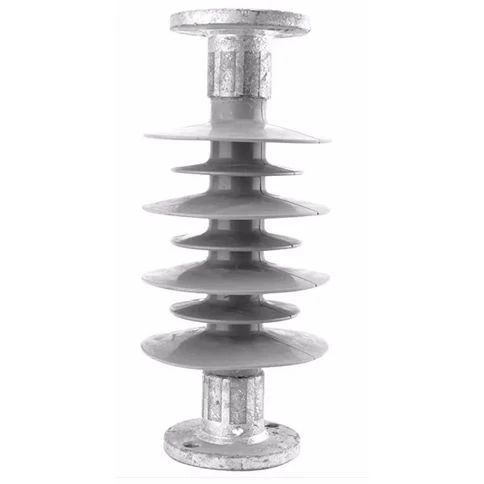

In conclusion, the surface hydrophobicity of a 50kv Composite Post Insulator is a critical property that ensures its reliable performance in various environmental conditions. By using high - quality materials, advanced manufacturing techniques, and proper maintenance strategies, we can provide insulators that have long - lasting hydrophobicity and excellent electrical insulation properties.
If you're interested in purchasing our 50kv Composite Post Insulators or any of our other products, we'd love to have a chat with you. Whether you're an electrical utility company, an industrial user, or an engineering firm, we can work together to find the best insulation solutions for your needs. Just reach out to us, and we'll be happy to discuss your requirements and provide you with a quote.
References
- IEEE Std 998-2002, IEEE Guide for Direct Lightning Stroke Shielding of Substations
- IEC 62217:2005, Composite insulators for use on a.c. systems - Definitions, test methods and acceptance criteria


